
No Limit Hold'em Starting Hand Chart
Welcome to the ResultsPoker.com guide for No Limit Texas Hold em. Choosing the right starting hands is the foundation of a winning strategy. We have created a comprehensive guide to help you make profitable decisions based on the type of game you are playing and the actions of your opponents.
CHART 1: LOOSE PASSIVE GAME (OFTEN 4 TO 5 LIMPERS PER HAND) NO ONE HAS RAISED YET
When you are playing in a loose and passive game you will often see multiple players limping into the pot. This chart guides your opening hands when no one has raised the stakes yet.
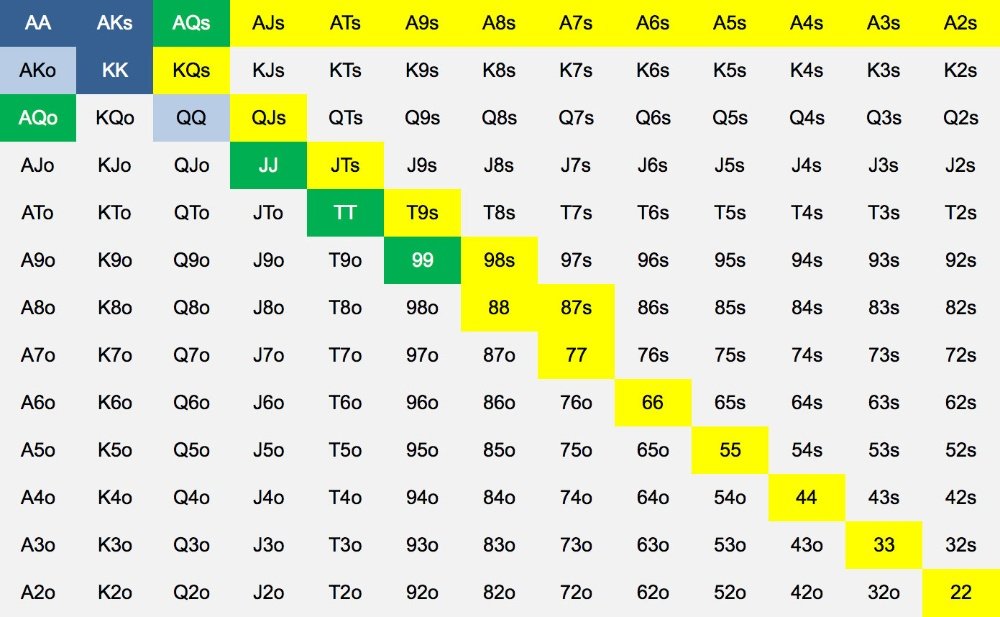
CHART 2: TIGHTER GAME (FEWER LIMPERS) OR MORE AGGRESSIVE GAME NO ONE HAS RAISED YET
If the game is tighter with fewer limpers or generally more aggressive your strategy must adapt. Use this guide when facing these conditions and no one has raised before it is your turn to act.
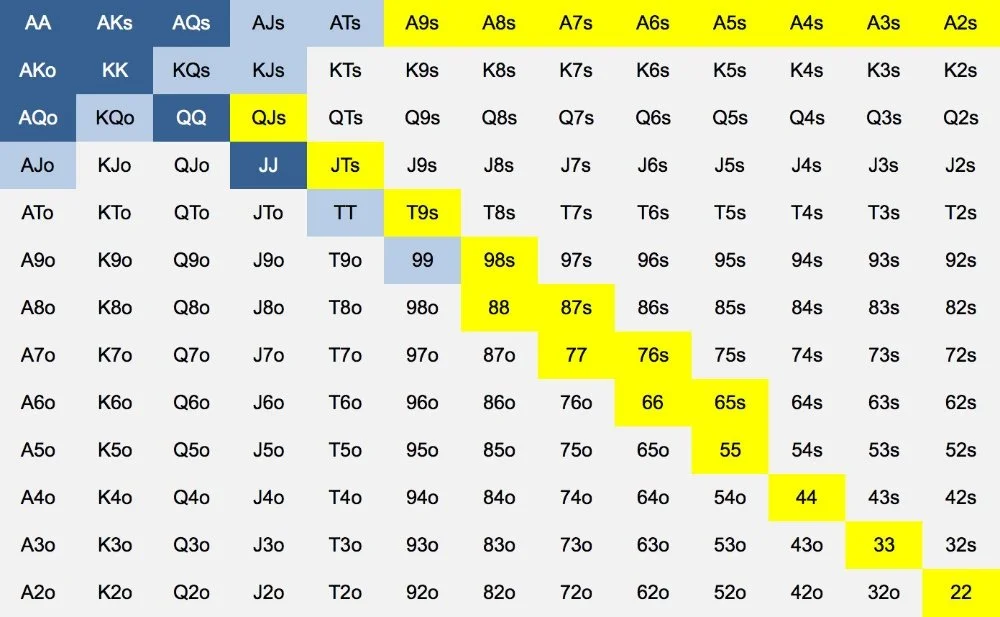
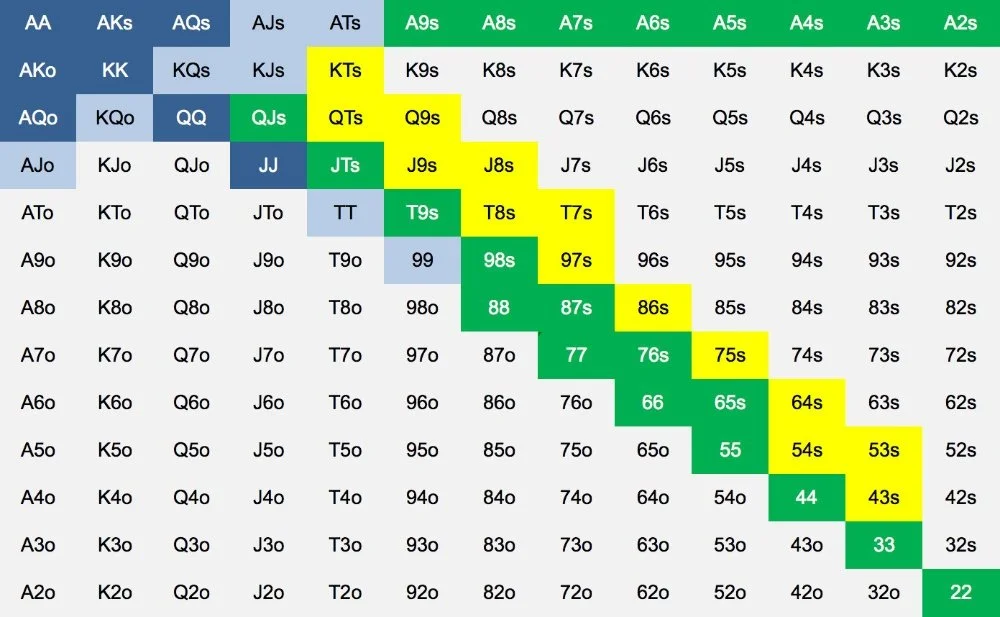
CHART 3: THERE HAS BEEN A SINGLE RAISE (3 TO 5 TIMES THE BIG BLIND) BEFORE YOU
When facing a single raise before the action reaches you your range needs to be adjusted. This final chart details the correct hands to play when a player has already increased the bet size by three to five times the big blind.
Frequently Asked Questions
What exactly does it mean to play the yellow hands under the right conditions?
Yellow highlights represent speculative starting cards. You should strictly fold them from early positions. However from middle or late positions they can become profitable if the situation allows. Consider these factors: Are there several callers ahead of you? Do those players make frequent mistakes post flop? Will they commit chips if you make a strong hand? Also consider if there is an aggressive player waiting to act behind you since a raise could force you out. If playing Chart 3 after a single raise assess whether your positional advantage post flop gives you a chance to steal the pot even without improving your hand.
Why do the yellow hands recommend raising in Chart 2 but not in Chart 1?
The overall goals differ between the two scenarios. In Chart 1 our objective is to call and invite more players into the pot. These specific holdings gain massive value when multiple passive players stick around and we hit a well concealed straight or a set. Conversely Chart 2 assumes tighter opponents. Here raising can often force folds and win the blinds directly or set up a profitable continuation bet to take down the pot on the flop.
How do AKs and AKo differ?
The lowercase letter indicates the suit. AKs stands for an Ace and King of the exact same suit. AKo stands for an Ace and King of different suits.
Can you define early middle and late positions?
Early position refers to the first two or three seats acting immediately after the blinds depending on the total number of players at the table. Late position includes the dealer button and the cutoff seat just to its right. Middle position covers all the seats located between those two groups.
What size should my raises be?
A solid baseline is making your raise three or four times the size of the big blind. You should add one additional big blind for every player who has already called the bet. If two players limped in front of you your raise should be five or six times the big blind.
How should I react if another player raises after I merely call?
Your decision to call a raise depends heavily on stack sizes the number of active players and your exact cards. Generally speaking holding a pocket pair leans toward calling. Having a large multi player pot also makes calling more attractive. You should generally fold suited connectors from early position if faced with a raise. You should also throw away easily dominated hands like King Queen that perform poorly against a standard raising range.
What is the strategy for playing out of the blinds?
From the small blind you can play a range similar to late position plus a few extra combinations. However do not fall into the trap of calling with weak junk like Ten Five offsuit simply because the price looks cheap. From the big blind if you are facing a raise you should defend with the same range you would normally play from early position.
Is it really correct to fold King Queen offsuit to a raise?
Absolutely. This specific holding struggles immensely against typical raising ranges. You are severely dominated if they hold Ace King Ace Queen or premium pairs like Aces Kings and Queens. Other common raises like Jacks Tens Nines or Ace Jack suited also have a mathematical edge over you. The only realistic time to call or re raise is from late position against an opener who also started in middle or late position which suggests they might have a wider opening range.
Many strategies advise folding Ace Jack offsuit early so why do these charts recommend calling?
Throwing away Ace Jack offsuit early is perfectly fine for many games. We included it as a call because at lower stakes tables players frequently make significant post flop errors which turns this into a profitable holding. This conclusion comes from analyzing millions of hands played at lower limits. Similar logic applies to King Queen offsuit and King Ten suited where you can realize a small long term profit at lower stakes but folding them early remains a completely valid alternative.
Do these charts apply to No Limit Texas Hold em tournaments?
These guidelines work best during the very early stages of a tournament when every player still has a deep stack of chips. You should abandon this specific chart strategy during the middle and late stages of tournament play as stack depths change.